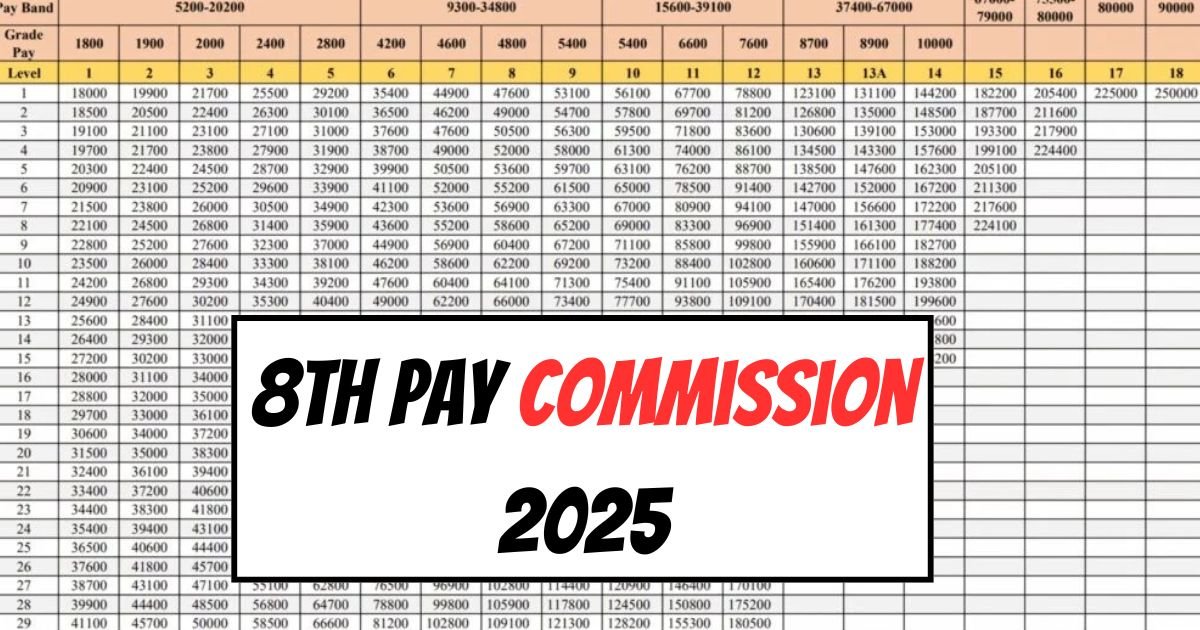
Think of functioning in a bureaucratic office under the government with the firm belief that with devastating price hikes on their backs, a finally approved 8th Pay Commission, en passant, might well be the ultimate financial emancipation for ten long years of service. This is not merely a novel hope for millions of employees belonging to the central government bifurcated into sections for employees and retirees. Despite inflation constantly robbing citizens blind, such an improvement comes as a much-needed reprieve averting the dryness inside the parched mouth of lost compensation. Amidst parliamentary debates and cafeteria discussions, the unfolding of this commission promises to add a fiscal uplift to the backbones of Indian bureaucracy. Passing through the corridors of excitement is a euphoria unearthed by hearsay of a possible salary hike and a range of other perks.
In The Spotlight?
The increase will affect more than 50.14 lakh central employees if implemented. Added to this will be its impact on almost 69 lakh pensioners. In this spectrum, teachers, clerks, engineers, as well as soldiers in industrial and non-industrial jobs therefore get attention. When neglected in most political rounds, pensioners now find an equal playground. The defence forces, serving the country’s borders, come next in line for the bonus.
Way forward
One should expect to have full information around mid-2027 after an 18-month setup period. While interim updates on hot topics will likely be coming out faster, abolitions might drop first. Gainful implementation? Perhaps the executive will in the near future determine the ramifications and allocations into the subsequent budgets. Maybe speculation might be related to January 1, 2026, but Minister Pankaj Chaudhary commented in the Lok Sabha that no time-specific planning is being considered.

| Aspect | Current (7th CPC) | Expected (8th CPC) |
|---|---|---|
| Basic Pay Revision | From 2016 levels | 20-25% overall hike |
| Fitment Factor | 2.57 | 2.8-3.0 (projected) |
| DA/DR Status | Ongoing hikes | Merged into new basic pay |
| Report Timeline | N/A | Mid-2027 submission |
| Beneficiaries | 47 lakh employees | 50.14 lakh employees + 69 lakh pensioners |
Perks And Possibilities
Allowances continue to be under scrutiny, crocking beyond salaries; City inhabitants are whispering: “HRA may see an increase”. The transport/airfare CAS is likely to fare better with green incentives, and the medical-inclined ones are sure to gain from FMAs, say pensioners. They argue tripling FMAs from Rs 1000 to Rs 3000 a monthcaused by talks in March 2025.
Keeping Books Balanced
The government will definitely have to pay for all this; estimates put the combined annual sum at Rs 3.7 lakh crore to Rs 3.9 lakh crore for the State governments and Rs 1.1 percent of GDP. These payments coupled with already-inflated revenue expenditures of around Rs 2.95 lakh crore per year and pension outgo of another Rs 2.74 lakh crore per year should make careful budget balancing a key consideration to avoid a fiscal blowout.
Conclusion In Waiting
The road map towards 2025 carries the existence of the Eighth Pay Commission: the only shining hope amid grueling times. From the fringes of high chambers of New Delhi to Awan garment-clad brigades, the highest pay band is promulgated. Why not keep in touch with the news lest your salary revision knocks at the door of your time! The claim is worth being ingrained-you’d think after following ten pages on how India’s unsung heroes are entitled to the light of day, now India’s quiet exclaimers do.